
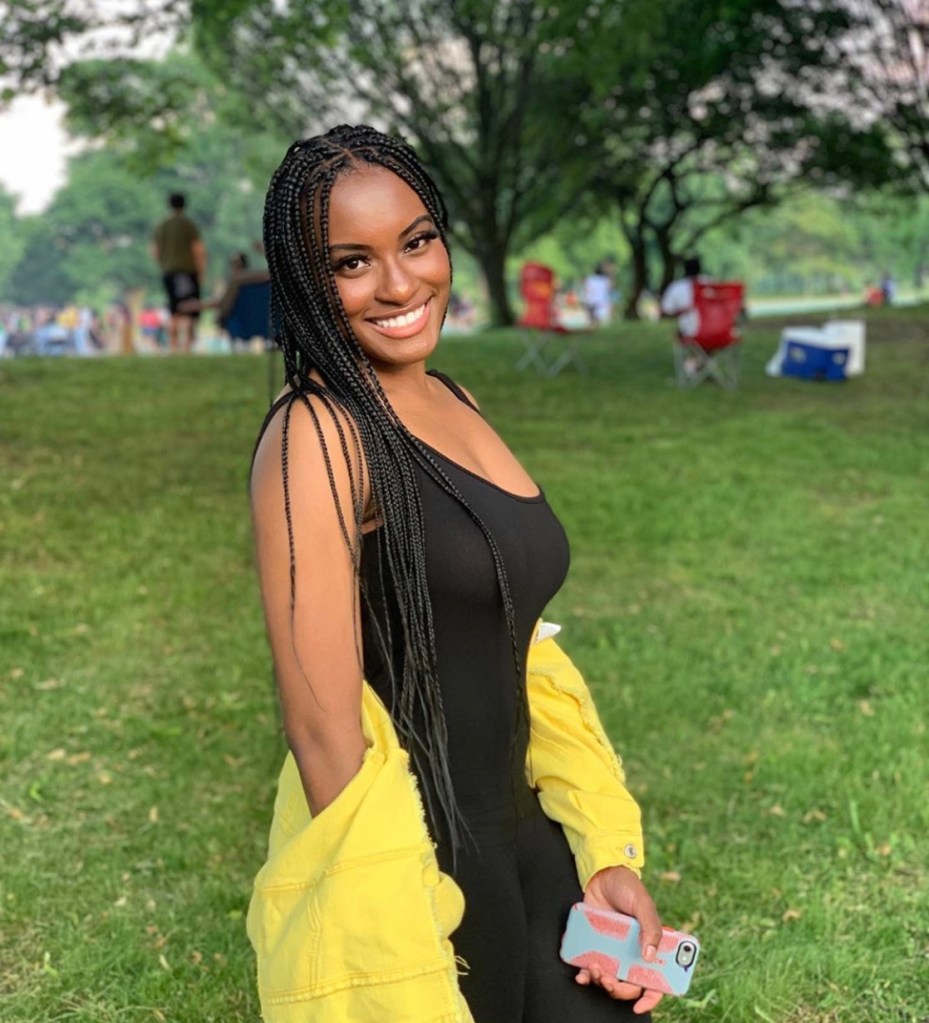
Student-Athlete
Activist
Collegiate 100 Vice President
World-Changer
Hey, I’m PJ.
Throughout my life, I have been trying to understand the complexities of my identity. In my entirely white kindergarten class in suburban Illinois, I was the only one that had kinky, short curls and was “well-spoken,” but what my classmates didn’t know was, when I went home, I heard a jumbled cacophony of Lingala, Swahili, and French. There was a sense of cultural dissonance in me knowing that my identity from home was invisible and unacknowledged at school. As I began to grow older, I started to understand what it meant to be a Black American, but because I have parents that migrated from the Democratic Republic of Congo, I also understood what it was like to revel in African culture. I know that there will be some complexities that I will have to sit with and that I won’t understand, like the ones that I faced growing up.
The definition of identity has been argued by academics and scholars, but to me, identity is a sense of who you are. It’s the way you think about yourself, your thoughts and beliefs, and even qualities you have and your personality. If you think about it, it is complex. Growing up, it did take me some time to understand my true and full identity, which at 20, I am still learning about, but I knew that in most spaces, strictly because of my skin color and hair texture, I would be seen as inferior, or worse, as a threat. Being Black in America means that when I go to the grocery store, I subconsciously feel the need to wear a college t-shirt so people know that I am college educated. Being Black in America means calling someone over the phone when getting pulled over, just in case. The reason I say identity is complex, is because even if you identify a certain way, the way you are perceived by others can deeply impact the way you view yourself. The self fulfilling prophecy, the socio-psychological phenomenon, is when a person ultimately internalizes the negative or positive labels that are given to them by society. My whole life, I’ve fought back and forth with my inner self to not internalize the evident misogynoir, which is the intersection of misogyny and anti-Blackness as it affects Black women.
The reason I say identity is complex, is because even if you identify a certain way, the way you are perceived by others can deeply impact the way you view yourself.
Being born in the U.S, my race was essentially assigned at birth, but my Congolese ethnicity wasn’t necessarily “assigned,” it was just something that I knew I was because of my heritage. During this apparent display of systemic oppression, police violence, and anti-blackness, it is important that our whole diaspora does what we can to protect our Black sisters and brothers in the United States, but also abroad, in countries like the Democratic Republic of Congo. As a Congolese-American woman, there needs to be solidarity within our diaspora, because we all have complex identities, which make people perceive us as a threat globally. Take action against anti-blackness. Have discussions with your friends and colleagues, pay Black artists for their work, and take the initiative to educate yourself and listen to and amplify Black voices everyday, not just when it’s trendy.
Yours truly,
Prevail N. Bonga
Get new adventures delivered to your inbox.
Contact
Email: damaris.j.zita@gmail.com
FR +33 6 67 99 14 94
US +1 (630) 796-5792
 damnmaris.com