
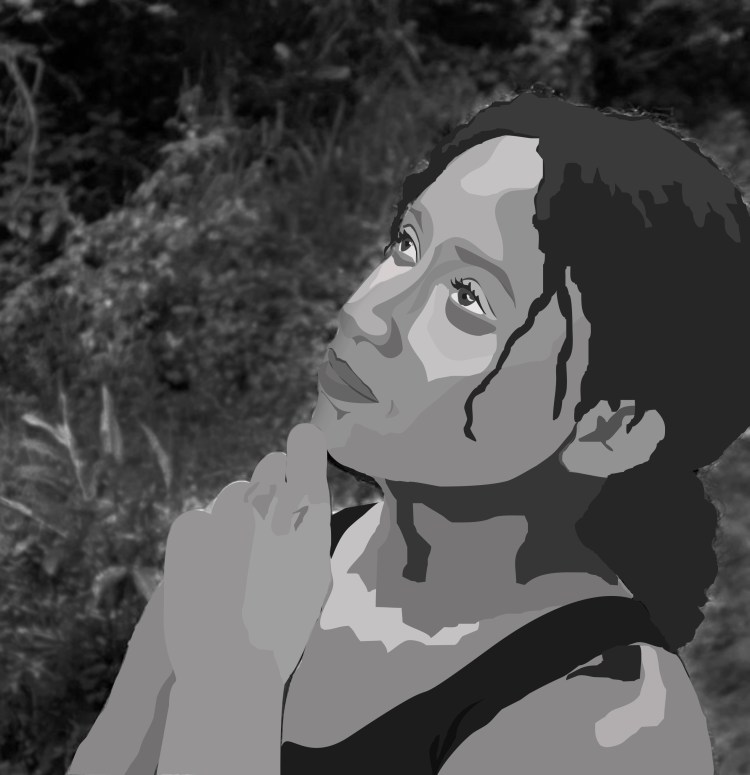
By Damaris Zita
What does it mean to be black?
I never knew. I didn’t have to know, I was Hispanic.
My whole life I denied being black, claiming every heritage I had but the most apparent one. I was Puerto Rican. Dominican. French. American. But not black.
I grew up speaking Spanish at home, my church was Hispanic, my friends were Hispanic, and I fit in because I was Hispanic. It didn’t matter what we looked like, it was our language and culture that bonded us together. In my secluded environment, I didn’t see the disparities that many black people encounter on a daily basis. Police brutality, mass incarceration, blatant racism, unequal pay, and limited opportunities were topics I knew about, but didn’t think they applied to me.
I was distanced from the struggle and the reality of being black in America because of the bubble that I lived in.
I had grown accustomed to small doses of racism or ignorance and passed it off as a normal experience that comes with being a minority in the United States. Since my parents grew up in the Caribbean as part of the majority, they didn’t have the same mentality as many minorities in the United States. This means I didn’t grow up thinking about race, learning about race, and I never wondered when someone was treating me unjustly if it was because of my skin color.
I didn’t learn about African-American culture at home since we are not African-American. I was content in not acknowledging what my skin color meant for me or what it represented for the majority of my life.
Woke-Up Call
It wasn’t until my first year of college that I got a wake-up call. In a conversation about race, I was vehemently denying that I was black to a group of new friends. “I have nothing against black people, I’m just not one of them”. This mentality was one I had developed through years of ignorance. My friends immediately took up the task of educating me on African-American culture; Everybody Hates Chris, Martin, Friday, Boyz in the Hood, and BET were all things I quickly became familiar with. Although none of these are things get you your black card, it is helpful to learn about a culture that you inherently represent. There is a small but crucial distinction that it took me years to understand. Being black is not the same thing as being African-American.
I denied being black because I was under the impression that in the United States, it was viewed as the same thing. What I didn’t realize was that, regardless of how I viewed myself (Puerto-Rican, Hispanic, French, American) it didn’t change the fact that when I walk outside, I’m viewed as black, and I receive the repercussions and benefits of that.
Afro-Latina
The real change started to happen when the term “Afro-Latina” became popularized, a term I never thought would have existed. I was just Latina. Since Latinx come in every shade imaginable, my skin color had never been of importance to me. I was just a Latina who happened to be darker. The term Afro-Latina and the numerous discussions in my household regarding the validity of that term made me realise that how I look affects how I’m treated. Firstly, the “Afro” part of that term reflects the struggles that black Hispanics have to deal with that white Hispanics don’t. It gives voice to the experience of a whole group of people I fit in to but had never acknowledged. It allowed me to accept a side of me, the part that the world sees, as my own.
Accepting this means that I am now acutely aware of social problems that the black community faces. When a black person is killed unjustly, instead of thinking “Oh that’s terrible, this country needs to change”, I think of how that could have been my brother, my father, my mother, me. We are black. I am black. And although it’s taken me years to realize it, this is my fight too.
So what does it mean to be black?
Being black means persevering, educating, creating, succeeding, failing, living. To be black is to be human and we deserve to be treated with the respect for human life that everyone deserves.
Although I am not African-American, I am black. Even though we may not share the same culture, we share the same struggle. Although we are different, we are seen as the same. We’re in this together.
BLACK LIVES MATTER
Resources to participate in the BLM Movement
- https://blacklivesmatters.carrd.co/#petitions
- https://support.eji.org/give/153413/#!/donation/checkout
- https://support.eji.org/give/153413/#!/donation/checkout
- https://www.vice.com/en_us/article/akzvga/how-to-support-black-owned-restaurants-right-now
- https://www.standwithbre.com/
- https://actionnetwork.org/forms/2005_email_blm_defund?source=em20_200530_DefundFB
 damnmaris.com
Fantastic article! So proud of you! Love hearing about your experience!
LikeLiked by 1 person